| Home |
| Nomads |
| Submit Resort Hotel |
| Submit a Destination |
| Submit a Tour |
| Post a Travel Thing |
| Submit a Restaurant |
| Advertise Here |
| Membership |
| Contact Us |
Login - Register
Travel Thingys
No entries were foundCosta Rica Hotels
Costa Rica hotels range from bed and breakfasts to luxury all inclusive, with fantastic swimming pools and amenities.
Holidays in Cuba
Holidays in Cuba are very attractive to surfers, but everybody will love the beaches and climate.
Flights To Luxor
See the best flight prices to Luxor that's on offer on the web! Just visit DealChecker.co.uk!
Cuba Tours
Cuba Tours will introduce you to a love of music, passion for dance and to the fantastic cuisine!
Holiday Deals
Holiday deals at On the Beach are not to be missed. Click here for more information.
Get on the fast lane and discover the Magnificence of the USA. See what makes the best of the land of dreams with a car from Holiday Autos car hire uk service
Travel Feeds
Feed Entries |
Nicaragua officially the Republic of Nicaragua ,
is a representative democratic republic.
It is the largest country in Central America with an area of 130,373 km2. The
country is bordered by Honduras to the north and Costa
Rica to the south. The Pacific
Ocean lies to the west of the country, the Caribbean
Sea to the east. Falling within the tropics,
Nicaragua sits between 11 degrees and 14 degrees north of the Equator
in the Northern Hemisphere. Nicaragua's
abundance of biologically significant and unique ecosystems contribute
to Mesoamerica's designation as a biodiversity hotspot. The capital city
of Nicaragua is Managua. Roughly one quarter of the nation's
population lives in the Nicaraguan capital, making it the second largest
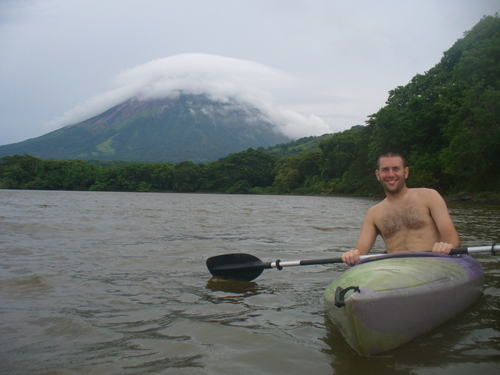
city and metropolitan area in Central America. The Spanish Empire conquered the region in the 16th century and the territory became associated with the Viceroyalty of New Spain and later the Captaincy General of Guatemala. Alongside the Spanish, the British established a protectorate on the eastern seaboard beginning in the middle of the 17th century, and ending roughly two centuries later with the rise of the Viceroyalty of New Granada in the coast. The eastern seaboard retains its colonial heritage; English is commonly spoken and the culture in Atlantic regions identify themselves as being more caribbean. In 1821, Nicaragua achieved its independence from Spain and joined the Federal Republic of Central America in 1823, later leaving the Federal Republic in 1838. Nicaragua increasingly became a subject of substantial interest because of its geographic position for a canal that would service the Windward Passage. Eighteen years after leaving the federal Republic, it also became the epicenter of William Walker's Golden Circle in Central America. Since its independence, Nicaragua has undergone periods of political unrest, military intervention on behalf of the United States, dictatorship and fiscal crisis—the most notable causes that lead to the Nicaraguan Revolution. Although the Somoza family ruled the country in the form of a dictatorship for forty years, Nicaragua was the first country to sign the UN Charter in 1945. Prior to the revolution, Nicaragua was one of Central America's wealthiest and most developed countries. However, the revolutionary conflict, paired with Nicaragua's 1972 earthquake have both reversed the country's prior strong economic standing. Despite the harsh economic effects of both phenomenons, post-revolution Nicaragua has maintained democratic practices and has experienced economic growth and political stability. In 1990, Nicaragua elected Violeta Barrios Torres de Chamorro as its president, making it the first country in the Americas to democratically elect a female head of state. The population in Nicaragua, reaching almost 6 million, is multiethnic. Segments of the population includes indigenous native tribes from the Mosquito Coast, Europeans, Africans, Asians and people of Middle Eastern origin. The main language is Spanish, although native tribes on the eastern coast speak their native languages. Nicaragua is widely considered the epicenter of the voseo pronoun form in Central America. Its location, along with the Nicaraguan Diaspora, has influenced Spanish among the other nations of Central America. The mixture of cultural traditions has cultivated a substantial amount of diversity in art, cuisine, literature, and music. The Central American Volcanic Arc runs through the spine of the country, earning Nicaragua its colloquial name: La Tierra de Lagos y Volcanes, which in English translates to: The Land of Lakes and Volcanoes. |
|