| Home |
| Nomads |
| Submit Resort Hotel |
| Submit a Destination |
| Submit a Tour |
| Post a Travel Thing |
| Submit a Restaurant |
| Advertise Here |
| Membership |
| Contact Us |
Login - Register
Travel Thingys
No entries were foundHotels Antigua
Are you thinking about Antigua for your next holiday? Click on the link for great deals on hotels.
Cuba Holidays
Cuba holidays have much to offer. The coral reefs are perfect for snorkeling or scuba-diving.
Flights To Wellington
Need a cheap flight to the most remote capital in the world? Visit this site!
Cuba Holiday
Discover the delights of Cuba. A holiday here will always be too short.
Holiday Deals
Holiday deals at On the Beach are not to be missed. Click here for more information.
Holidays To Egypt All Inclusive
Holidays to Egypt can be all inclusive or you can plan your own! Use the brochure beaters!
car hire france from industry leading specialist Holiday Autos. Make sure you choose the best and forget the rest if you want to rent a car in france
Travel Feeds
Feed Entries |
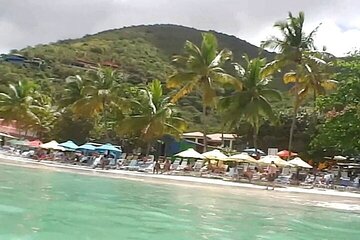
Things to do in the British Virgin islands:Sailing, Scuba Diving, Watersports and fantastic beaches. Take a visit to the ruins of
St Phillip's Church, Tortola, one of the more
important historical ruins in the Territory. The British Virgin Islands consist of the main islands of Tortola,
Virgin Gorda, Anegada and Jost
Van Dyke, along with over fifty other smaller islands and cays.
Approximately fifteen of the islands are inhabited. The capital, Road
Town, is situated on Tortola, the largest island which is
approximately 20 km (12 mi) long and 5 km (3 mi) wide. The islands have a
total population of about 22,000, of whom approximately 18,000 live on
Tortola. The Virgin Islands were first settled by the Arawak from South America around 100 BC (though there is some evidence of Amerindian presence on the islands as far back as 1500 BC). The Arawaks inhabited the islands until the fifteenth century when they were displaced by the more aggressive Caribs, a tribe from the Lesser Antilles islands, after whom the Caribbean Sea is named. The first European sighting of the Virgin Islands was by Christopher Columbus in 1493 on his second voyage to the Americas. Columbus gave them the fanciful name Santa Ursula y las Once Mil Vírgenes (Saint Ursula and her 11,000 Virgins), shortened to Las Vírgenes (The Virgins), after the legend of Saint Ursula. The Spanish Empire claimed the islands by discovery in the early sixteenth century, but never settled them, and subsequent years saw the English, Dutch, French, Spanish and Danish all jostling for control of the region, which became a notorious haunt for pirates. There is no record of any native Amerindian population in the British Virgin Islands during this period, although the native population on nearby St. Croix was decimated. The Dutch established a permanent settlement on the island of Tortola by 1648. In 1672, the English captured Tortola from the Dutch, and the English annexation of Anegada and Virgin Gorda followed in 1680. Meanwhile, over the period 1672–1733, the Danish gained control of the nearby islands of St. Thomas, St. John and St. Croix. The British islands were considered principally a strategic possession, but were planted when economic conditions were particularly favourable. The British introduced sugar cane which was to become the main crop and source of foreign trade, and slaves were brought from Africa to work on the sugar cane plantations. The islands prospered economically until the middle of the 1800s, when a combination of the abolition of slavery in the Territory, a series of disastrous hurricanes, and the growth in the sugar beet crop in Europe and the United States significantly reduced sugar cane production and led to a period of economic decline. In 1917, the United States purchased St. John, St. Thomas and St. Croix from Denmark for US$25 million, renaming them the United States Virgin Islands. The British Virgin Islands were administered variously as part of the British Leeward Islands or with St. Kitts and Nevis, with an Administrator representing the British Government on the Islands. Separate colony status was gained for the Islands in 1960 and the Islands became autonomous in 1967. Since the 1960s, the islands have diversified away from their traditionally agriculture-based economy towards tourism and financial services, becoming one of the wealthiest areas in the Caribbean. |
|